Cuban Salsa in Ireland: How to Start Dancing at Dublin Salsa Academy
July 13, 2026 • Dublin Salsa Academy
You have seen the videos. The fast turns. The energy. The way two people move like they have been dancing together for years.
Looks complicated. It is not.
Not if you start with the right style.
What Is Cuban Salsa
Cuban salsa, or Casino, comes from 1950s Havana. Working-class Cubans adapted son and danzon to the music of the time. The result was a dance built for small spaces and big energy.
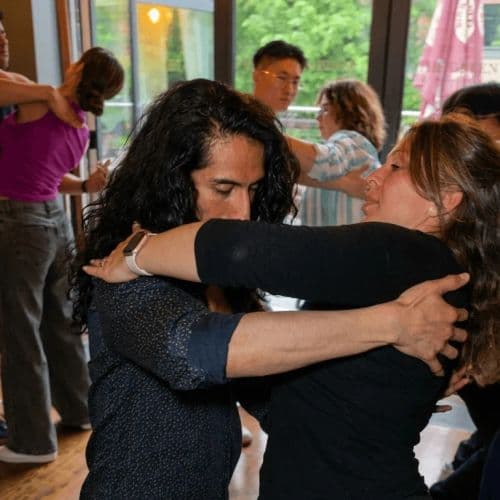
Unlike LA or New York style salsa, Casino is circular. Partners move around each other instead of travelling back and forth in a straight line. That makes it easier on a crowded floor and easier on your brain.
The basic step is called Guapea. Both partners step in place at the same time. No complicated footwork. You find the beat together and build from there.
Then there is Rueda de Casino. Multiple couples form a circle. A caller shouts the next move. You switch partners every few seconds. If you mess up, everyone laughs and keeps going.
It is salsa without the pressure.
Why Beginners Take to It
The circular structure is forgiving. Miss a step and you adjust. There is no slot to return to. No precise line to hold.
The moves stack logically. Learn the basic. Add a turn. Then a combination. Each one makes sense because it builds on the last one.
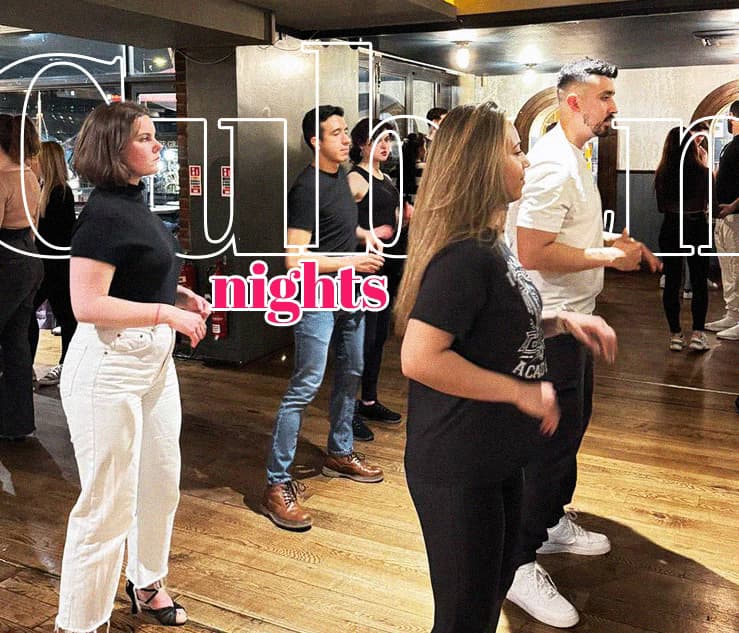
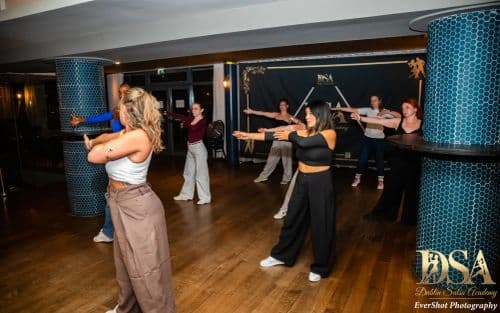
Partner work starts in week one. You do not spend months practising alone before you dance with someone. From your first class, you are working with other people. That is how you learn faster.
DSA teaches Casino across multiple levels. Absolute Beginner through to Intermediate and Advanced. You start where you are and move up when you are ready. Here is the full levels breakdown.
Try a Beginner Class This Week
No partner. No experience. Just show up.
DSA runs beginner Cuban salsa courses every week at the Harbourmaster. 8 weeks, €85.
Nobody starts salsa to get fit. But it happens anyway.
A salsa class burns 400 to 600 calories an hour. That is the same as a light jog. Except nobody jogs for an hour and comes out smiling.
The University of Illinois ran a study on older adults who had not exercised in years. After four months of salsa classes, they walked 400 metres 38 seconds faster than when they started. The non-dancing group improved by 10 seconds.
Coventry University found that salsa dancing improved visual spatial working memory. You have to track timing, position, and your partner all at once. That forces your brain to work differently.
A 2023 systematic review confirmed what dancers have known for decades: Latin dance reduces stress, improves mood, and strengthens social connection.
And the New England Journal of Medicine study everyone references? Dancing lowered dementia risk by 76%. More than reading. More than crosswords.
What It Does to Your Social Life
Almost one in three older adults in Ireland report feeling lonely some of the time. That statistic comes from the TILDA study at Trinity College Dublin.
Cuban salsa is the opposite of lonely.
In Rueda, you cannot hide. You rotate partners constantly. You make eye contact. You high-five the person next to you when someone nails a spin. By the end of the night you have danced with a dozen people you did not know an hour before.
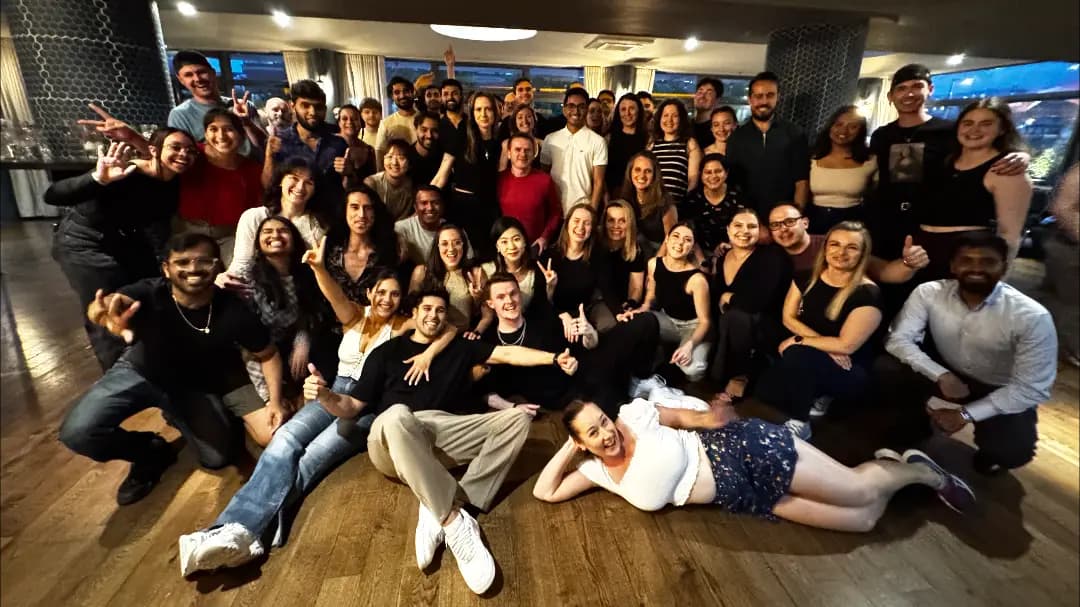
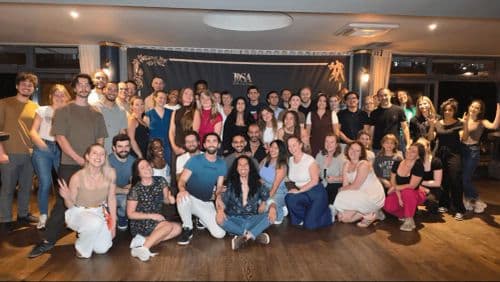
DSA has Cuban salsa classes every week. 37 nationalities in the room. 510 active students. A 5.0 rating from over 393 Google reviews. People walk in alone and stay because of the people they meet.