Do Cubans Dance Salsa on 1 or 2? What You'll Learn in Dublin
August 31, 2026 • Dublin Salsa Academy
You have been in class for weeks. You finally hear the 1. Then you watch a video of Cubans dancing in Havana, and they seem to step somewhere else entirely. On 2? On 3? You start to doubt everything you have learned.
Here is what is going on, in plain language.
Most modern Casino is danced on 1. The old tradition, coming from son cubano, was danced on 2. And in Cuba today, plenty of dancers just feel the music and jump in wherever the beat lands.
The honest answer is: it depends who you ask. And it matters less than you think.
What matters is what you will learn in your salsa classes in Dublin. And the answer there is simple: you start on 1, and your teacher helps you hear it.
What Does This Mean for You in Dublin?
Nothing scary. That is the point.
You do not need to solve the timing debate before your first class. You need to find the beat and step. That is it.
At Dublin Salsa Academy, we start every beginner on 1. Your teacher helps you hear it, then shows you how to play with it as you grow.
Once you can hear the 1, you can choose to dance the 2, or the 3, anywhere the music takes you. Musicality comes later. First comes the step.
Stop Worrying About the Count
Just find the beat and step.
Join a beginner Cuban salsa course and let a teacher find the 1 for you. No partner, no experience, no timing exam.
Join Beginner CoursesThe Traditional Answer: On 2
Casino grew out of son cubano, and son was traditionally danced a contratiempo, which means on 2. Dancers step on 2, 3, 4 and 6, 7, 8. No step on the 1. The emphasis lands on the off-beat.
That is the old Cuban way. You can still see it in the way older dancers and purists move.
What Cubans Actually Do Today
Here is where it gets interesting. In Cuba today, most people learn Casino from friends and family, not from dance schools. They do not learn to find the 1. They learn to feel the pulse and jump in.
One Cuban teacher put it well: a Cuban finds a beat and jumps in. The foreigner looks for the beginning of the musical phrase.
Because the clave spans 8 beats, a dancer who just feels the music has about a 1 in 8 chance of landing on the 1. That is 12.5%. Most Cubans dance on 3, or 5, or 7, and it is not a mistake. It is how the dance was always passed down.
The Confusing Part
Here is why this question confuses everyone. In the salsa world, on 2 usually means New York style. Eddie Torres made it famous in New York. It is a linear, slot dance, danced on 2.
Cuban contratiempo is on 2 too, but it is a different dance. It is circular, it is Casino, and it comes from son. Same count, different world.
So when someone asks if Cubans dance on 2, the honest answer is: the old tradition, yes. The modern club scene, usually on 1. And in Cuba itself, honestly, it varies from dancer to dancer.
Where to Learn in Dublin
DSA teaches Casino in a way that works for beginners: start on 1, build confidence, then explore timing and musicality as you progress.
Classes run at the
Harbourmaster on Custom House Quay in Dublin 1, three days a week. A 4-week beginner course is €45, an 8-week course €85.
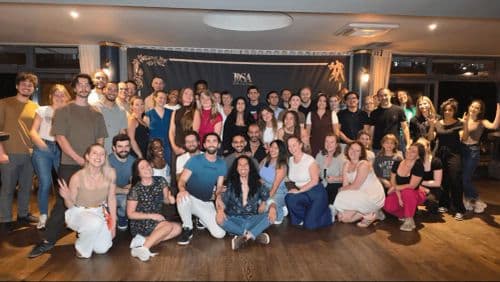
Most people walk in without a partner and without any experience. They leave knowing how to find the beat.
Ready to Dance?
Spots are limited.
The next beginner intake is filling up. Book now and find your own timing on the floor.
Book Your SpotRecent Posts
October 7, 2026
Dance Classes for Couples in Dublin: A Date Night That Actually Works
How dance classes for couples work in Dublin, what four weeks cost for the two of you, and where you can learn together at Harbourmaster in the IFSC.
September 28, 2026
Salsa Dancing in Dublin Tonight: The Three Nights You Can Actually Dance
Where to dance salsa and bachata in Dublin this week: three nights a week, one city centre floor, €5 at the door, and no partner needed.
September 25, 2026
What Is Bachata? The Dance, the Music and the Three Styles Explained
Bachata is a guitar-led dance from the Dominican Republic, counted in fours with a tap on the last beat. Here is what the music is, how the steps work, and which style Dublin teaches.