How Is Cuban Salsa Different from Regular Salsa?
August 28, 2026 • Dublin Salsa Academy
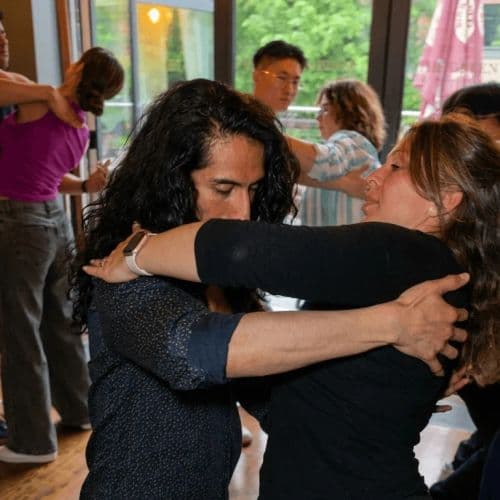
It is a Friday night at a Latin social in Dublin. Two couples are dancing salsa. And you notice something odd.
One couple is travelling back and forth along an invisible line. The other is circling each other, turning, trading sides, never staying still.
Both call it salsa. It does not look like the same dance.
Here is why: one is regular salsa, danced in a slot. The other is Cuban salsa, danced in a circle. That one difference changes everything. Your steps, your music, your body, even how easy the dance is to learn.
What Is Cuban Salsa, Really?
Cuban salsa comes from 1950s Havana. Its name is Casino, from the casinos deportivos, the social dance halls where it was born.
It grew out of son cubano, mambo, cha-cha-cha and rumba. Dancers took those roots and turned them into something playful, circular and full of improvisation.
In Cuba, dancing Casino is part of everyday social life. People learn it from friends and family. They learn to feel the music first, and the steps follow. You can start the same way at
our Cuban salsa classes in Dublin.
The Circle vs The Slot
Regular salsa, LA style and New York style, is danced on a slot. Picture a narrow corridor on the dance floor. The leader and follower trade places, back and forth, along that corridor the whole song.
Cuban salsa ignores the corridor. Partners circle each other. They rotate, they swap sides, they keep turning. On a crowded floor in Dublin, a circle is a gift. You need far less space.
There it is. Regular salsa needs room to travel. Cuban salsa can happen almost on the spot.
The Steps Are Different Too
In LA style, the leader breaks forward on count 1. Back on 5. Clear, sharp, linear.
In Casino, the basic open step is called the guapea. Both partners step back together, then forward together, facing each other. The leader drags his left foot backward instead of stepping forward.
Same 8 count. Different feet. Same music, different feel.
The Music Is Different
LA style is usually danced to salsa dura, the classic brassy New York salsa.
Cuban salsa is danced to timba and son. Timba is Cuba’s own evolution of salsa. It is heavier on bass and drums, more percussive, more aggressive. It drives that circular movement.
You can hear it before you see it. Timba pushes you to move around. Salsa dura pushes you to travel.
And the Social Side
Regular salsa is often about precision. Clean technique, sharp turns, polished shines.
Cuban salsa is about sabor. Flavour. The teasing, the play, the connection. Dancers improvise. They borrow moves from rumba and Afro-Cuban tradition. The goal is not to look perfect. It is to have fun with your partner.
There is also Rueda de Casino. A circle of couples, a caller shouting moves, everyone swapping partners. It is salsa as a group sport. We introduce Rueda at intermediate level.
Which Is Easier for a Beginner?
Many people assume Cuban salsa is harder. The footwork is actually simpler than linear styles.
The circular pattern is forgiving. Miss a step and you adjust. There is no slot to return to, no line to hold.
Regular salsa asks for cleaner technique earlier. Cuban salsa asks you to feel the music first. That is why so many beginners take to it fast.
Try Cuban Salsa in Dublin
No partner. No experience. Just show up.
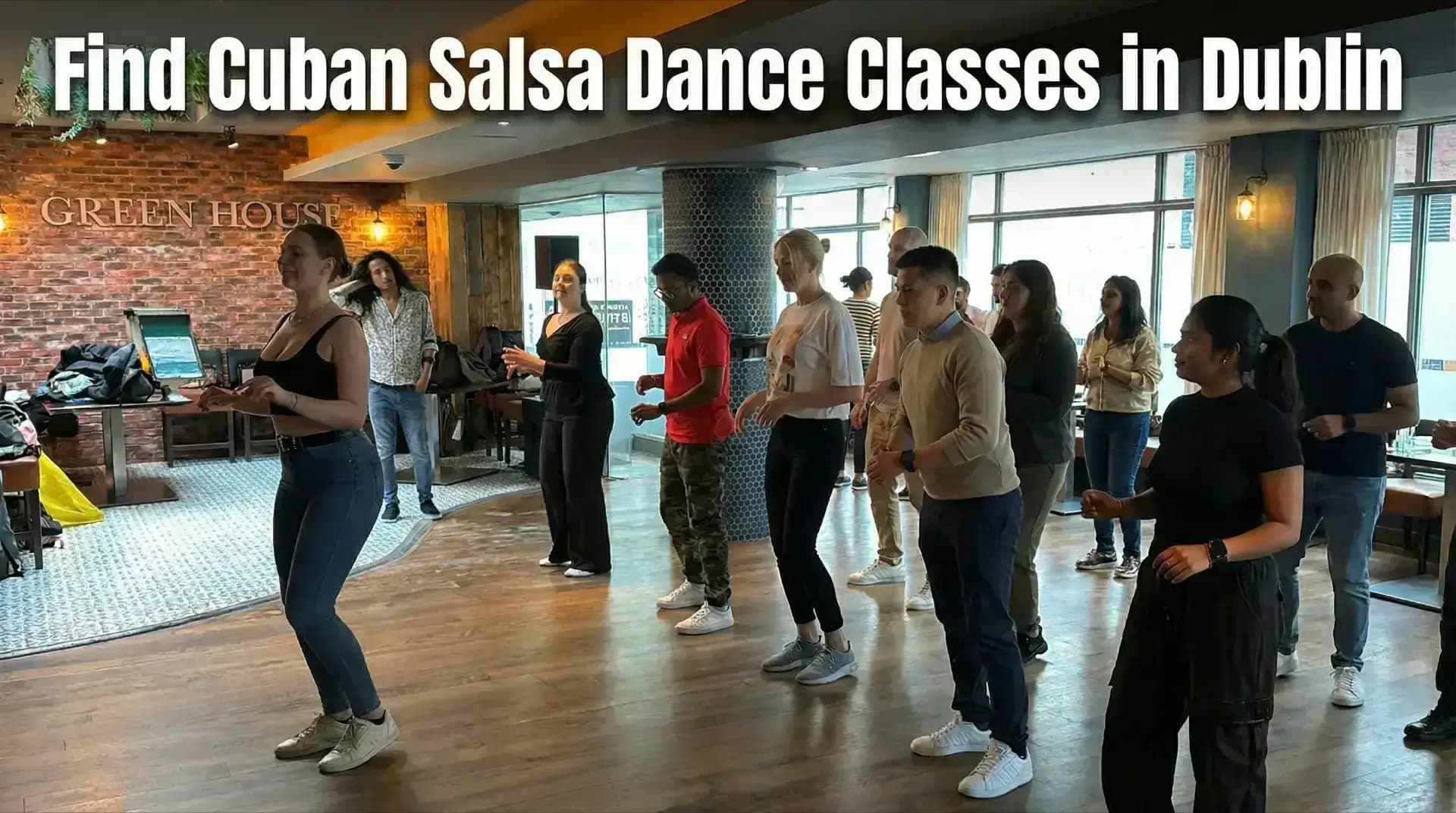
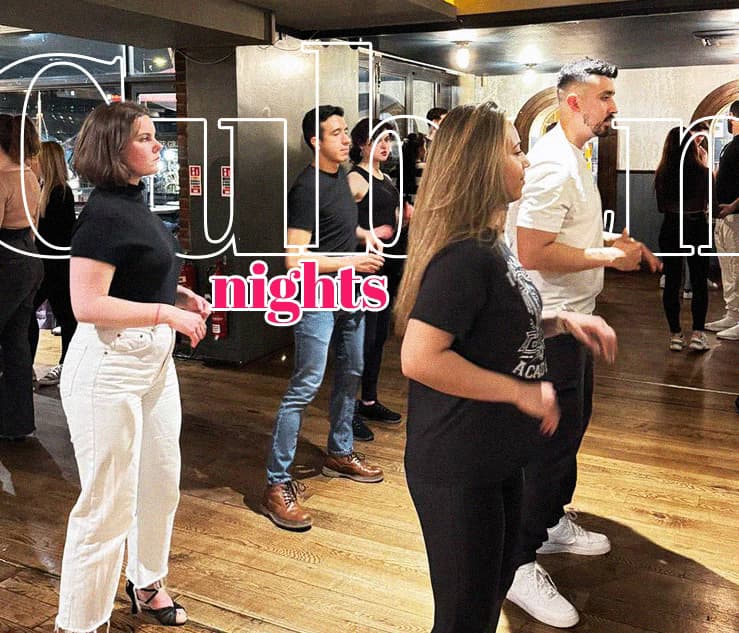
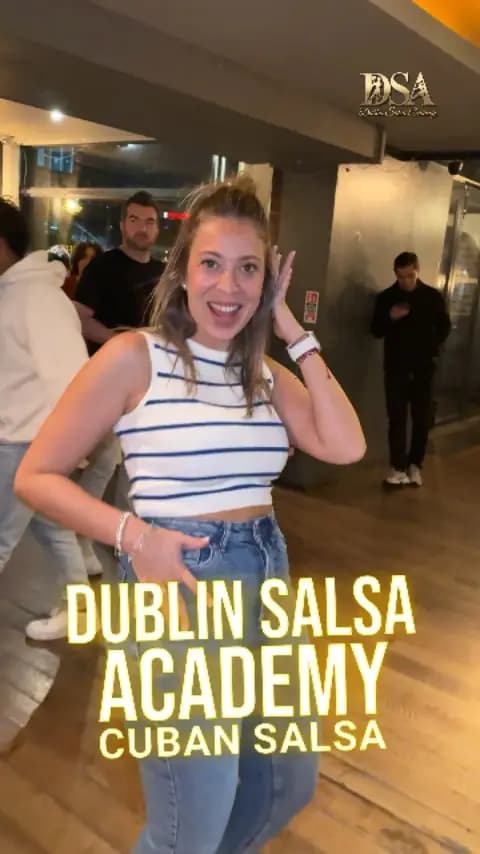
Cuban salsa classes run at the Harbourmaster three days a week. Join a beginner course and learn the circle from week one.
Join Beginner CoursesWhere to Learn Cuban Salsa in Dublin
Most salsa schools in Dublin teach LA style. A straight line. A slot.
Fewer teach Cuban. Fewer still teach it year-round.
Dublin Salsa Academy runs
Cuban salsa classes every week at the Harbourmaster, right on Custom House Quay in Dublin 1. Three minutes from Connolly Station, five from Busaras.
Beginner courses start from €45 for 4 weeks or €85 for 8 weeks. Cash or Revolut at the door. You will not be judged, and you do not need a partner.
The Bottom Line
Regular salsa is a corridor. Cuban salsa is a circle.
That is the difference between them.
One travels. The other revolves. One asks for precision. The other asks for sabor.
If you want the dance that is built for connection, for laughter, and for a packed Dublin night, Cuban salsa is your style.
Ready to Dance the Circle?
Classes fill up fast.
Join our next beginner Cuban salsa course. No partner needed, no experience required.
Book Your SpotRecent Posts
October 7, 2026
Dance Classes for Couples in Dublin: A Date Night That Actually Works
How dance classes for couples work in Dublin, what four weeks cost for the two of you, and where you can learn together at Harbourmaster in the IFSC.
September 28, 2026
Salsa Dancing in Dublin Tonight: The Three Nights You Can Actually Dance
Where to dance salsa and bachata in Dublin this week: three nights a week, one city centre floor, €5 at the door, and no partner needed.
September 25, 2026
What Is Bachata? The Dance, the Music and the Three Styles Explained
Bachata is a guitar-led dance from the Dominican Republic, counted in fours with a tap on the last beat. Here is what the music is, how the steps work, and which style Dublin teaches.